Built for an educational institute. Internal management system.
Tahawi Institute: an institute website and admin system
A public website and staff, teacher and student portals for a London Islamic institute, covering registration, exam results, attendance and fees.
At a glance
- Organisation
- A part-time Islamic institute in London
- What was built
- Public website plus role-based portals and internal management system
- Built by
- The studio’s founder, before Tibyan Labs was formed
- Status
- Public website and results portal live
- Built with
- Next.js, React, TypeScript, Tailwind CSS, Supabase (Postgres, row-level security), Playwright, Vercel, Resend
The situation and problem
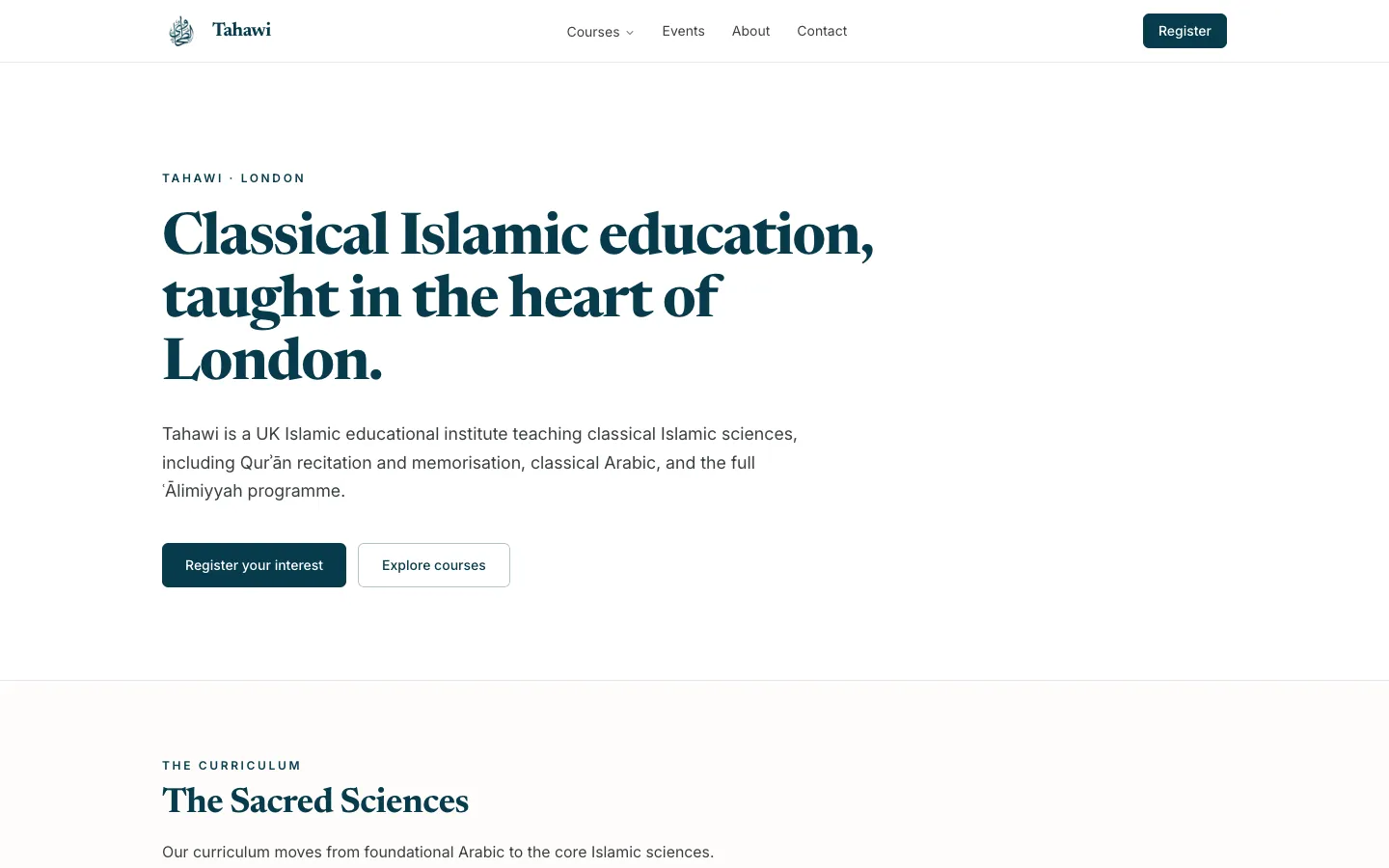
Tahawi is a London institute teaching Arabic, Qur’an and the classical Islamic sciences to part-time students. Its admissions, attendance, exam results and staff administration had been run with separate spreadsheets and scripts. The platform brings them into one system, with clear rules about who can see and change what.
What was built
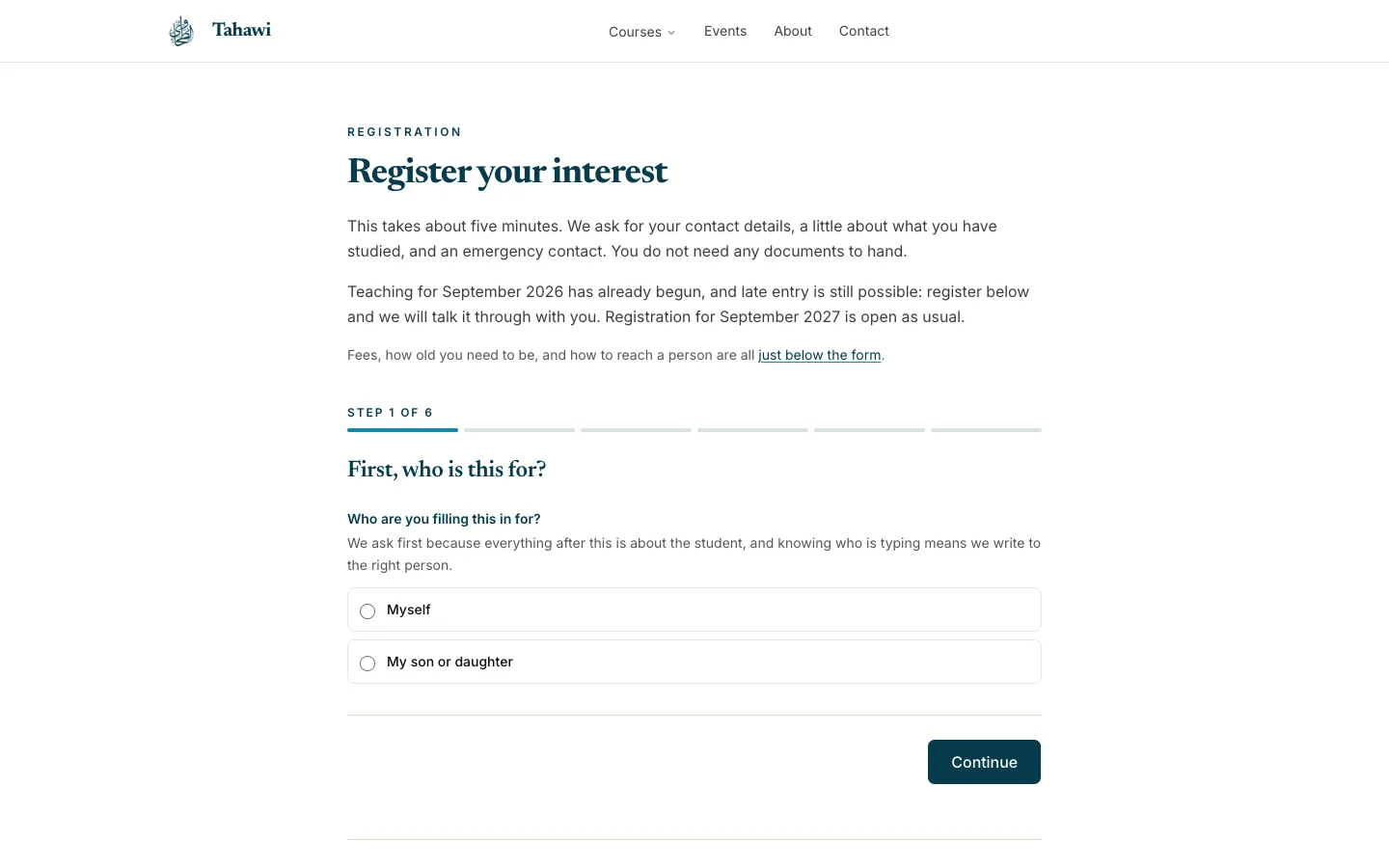
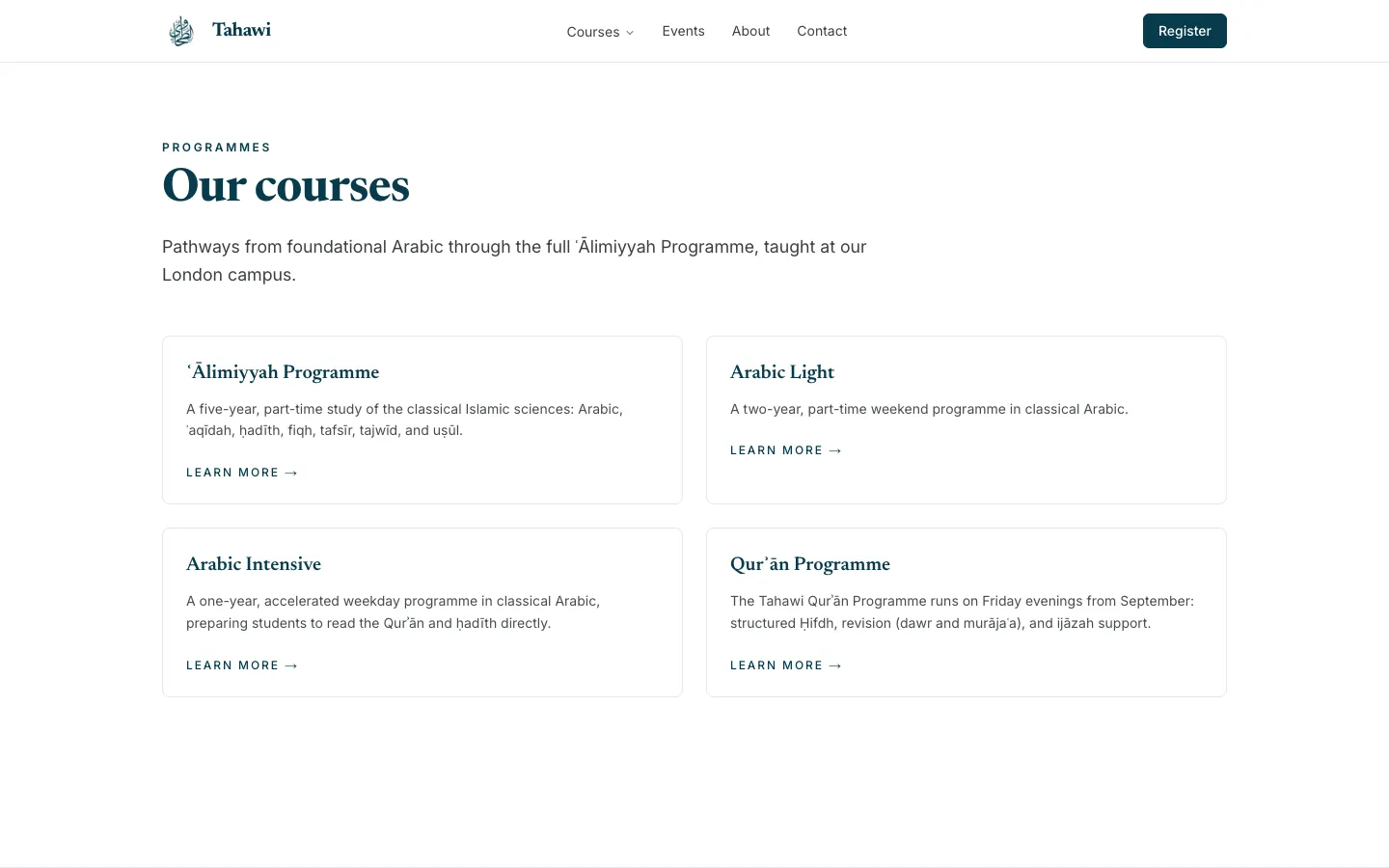
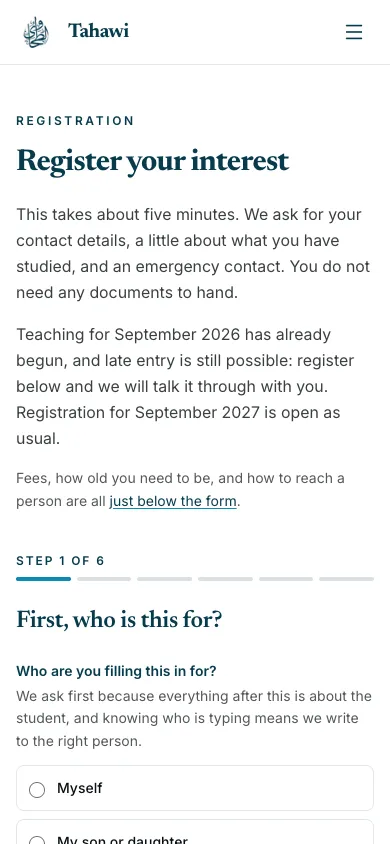
- A public website. Course pages, events, frequently asked questions, a safeguarding statement, vacancies and a step-by-step registration form.
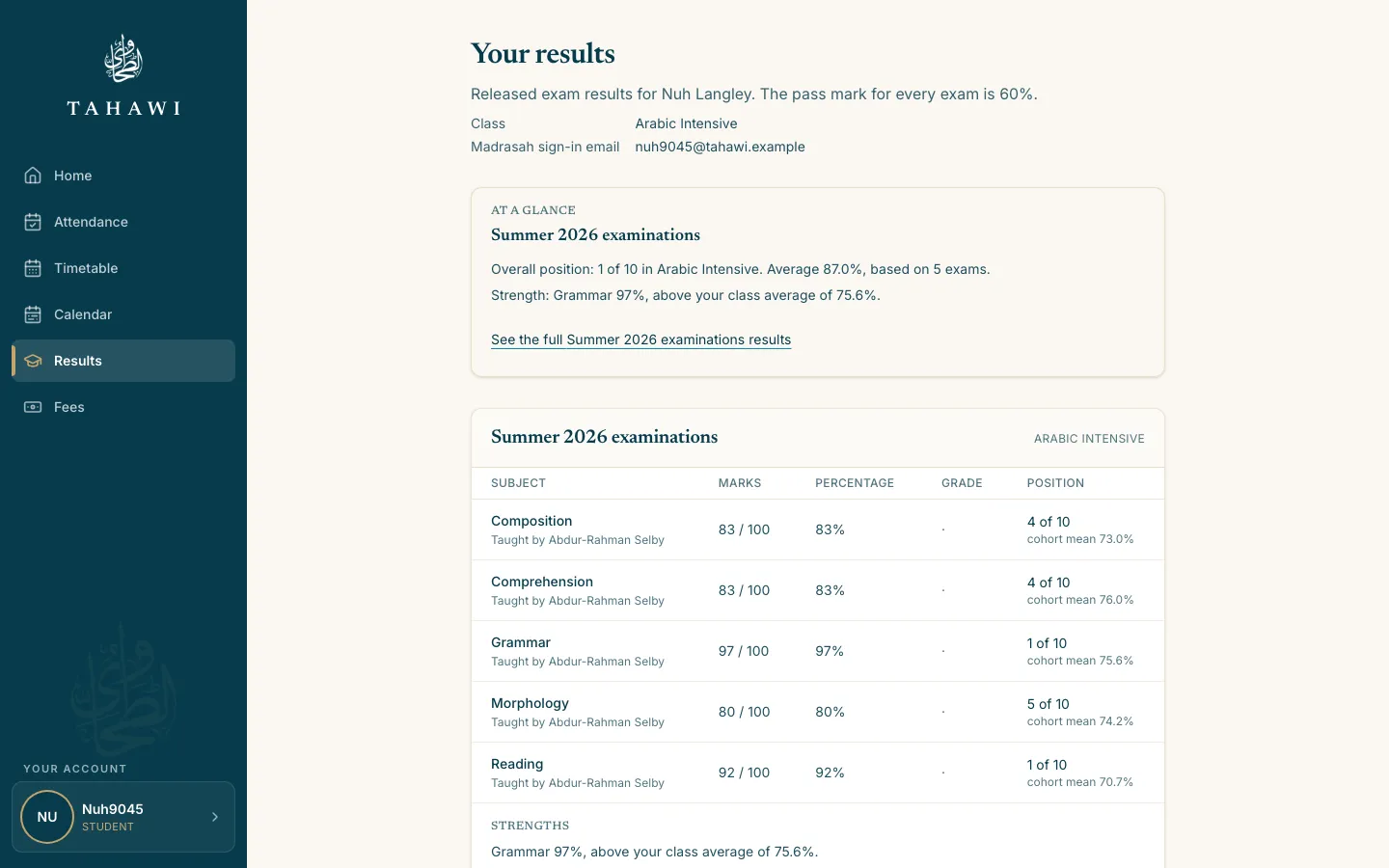
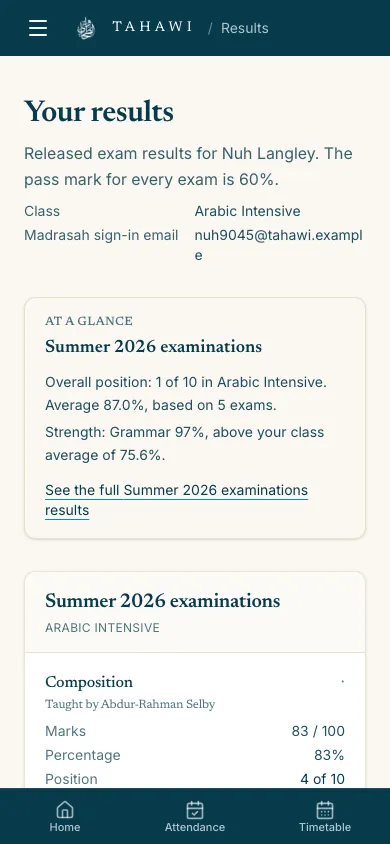
- A student portal. Students sign in to see their own results and, where switched on, their own fee account.
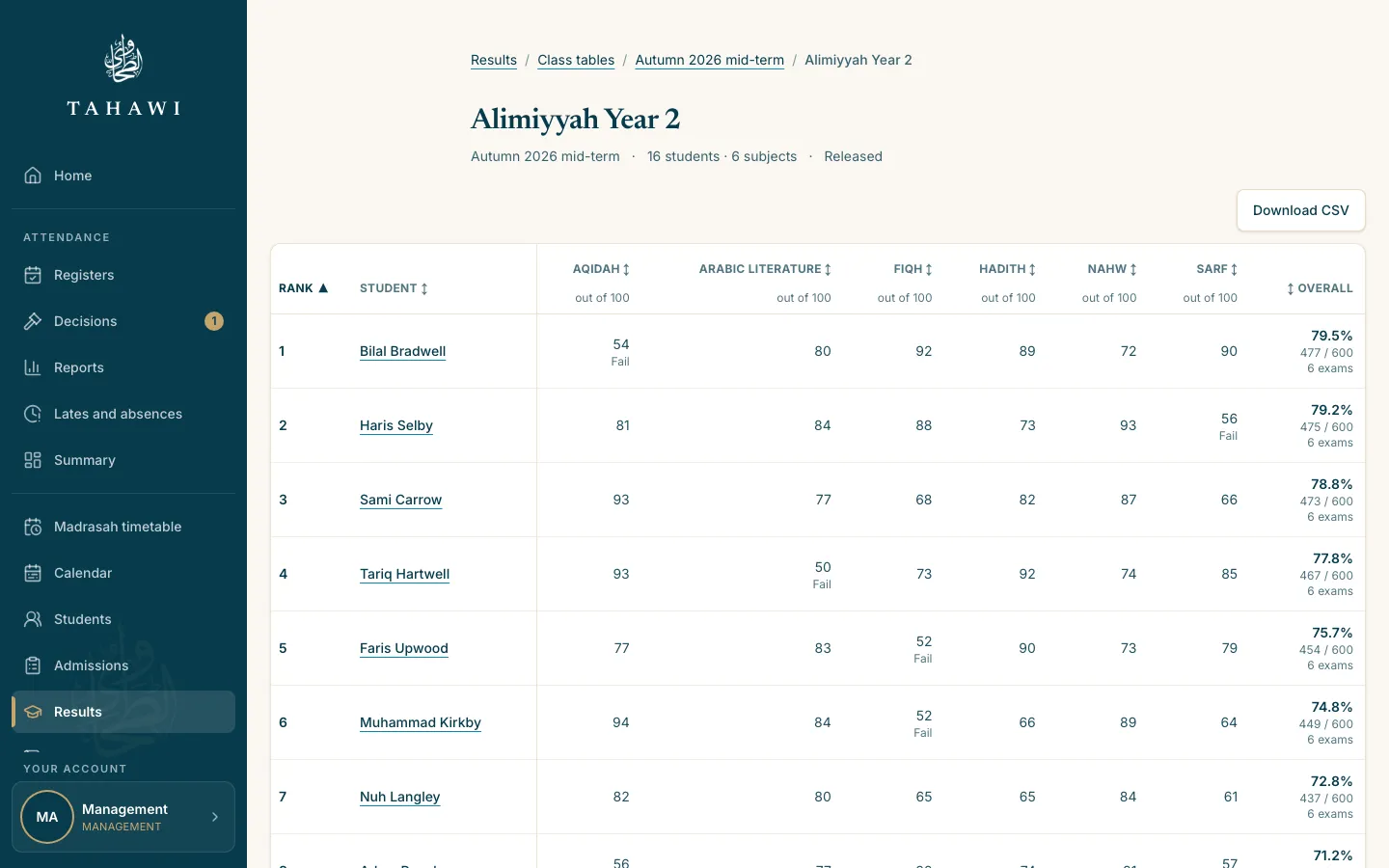
- Exam results. Staff import and check results, then release them to students. Results show as printable transcripts, with the pass mark and rules applied consistently.
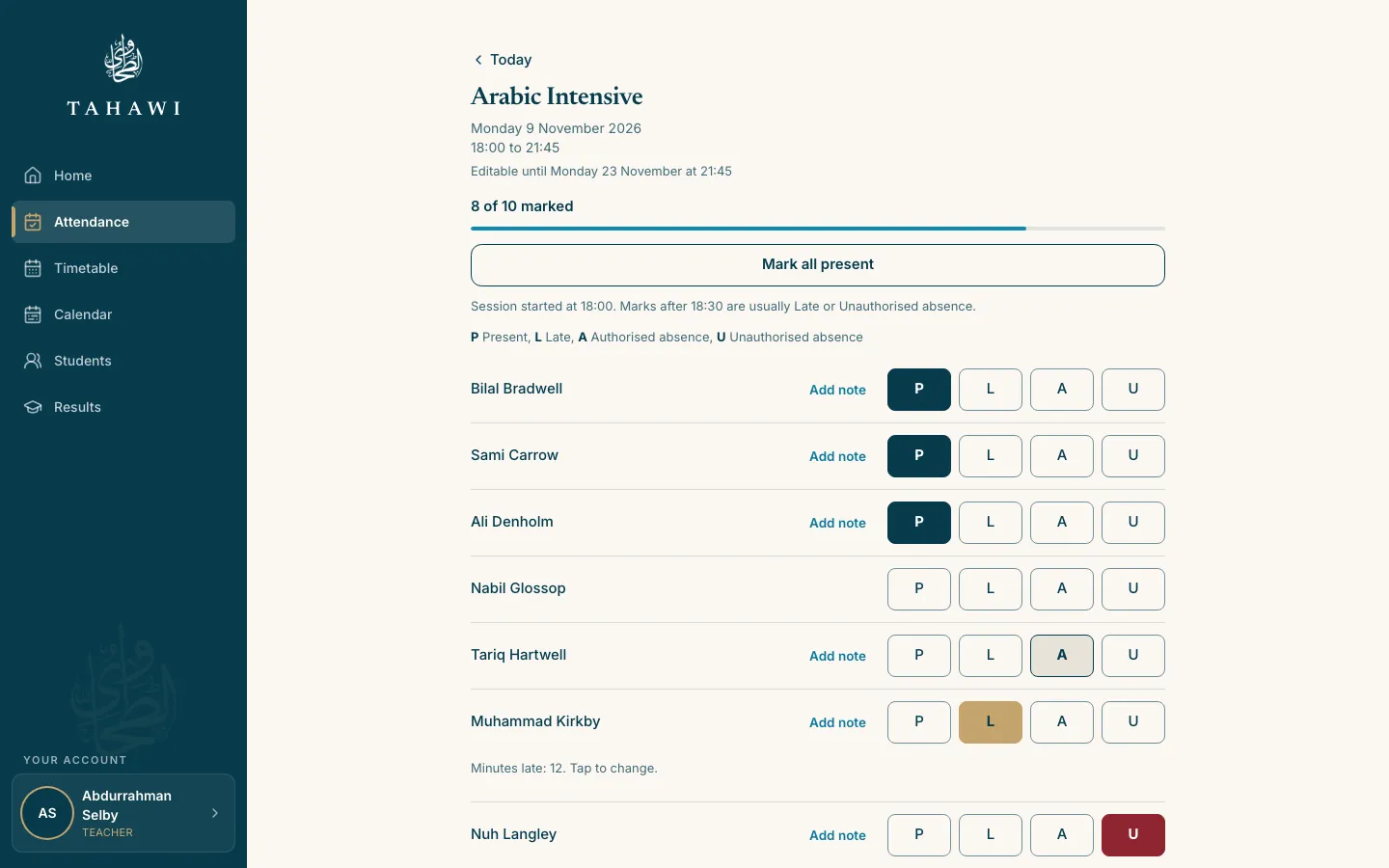
- Attendance registers. Teachers mark registers for their classes, and managers review absences and follow them up.
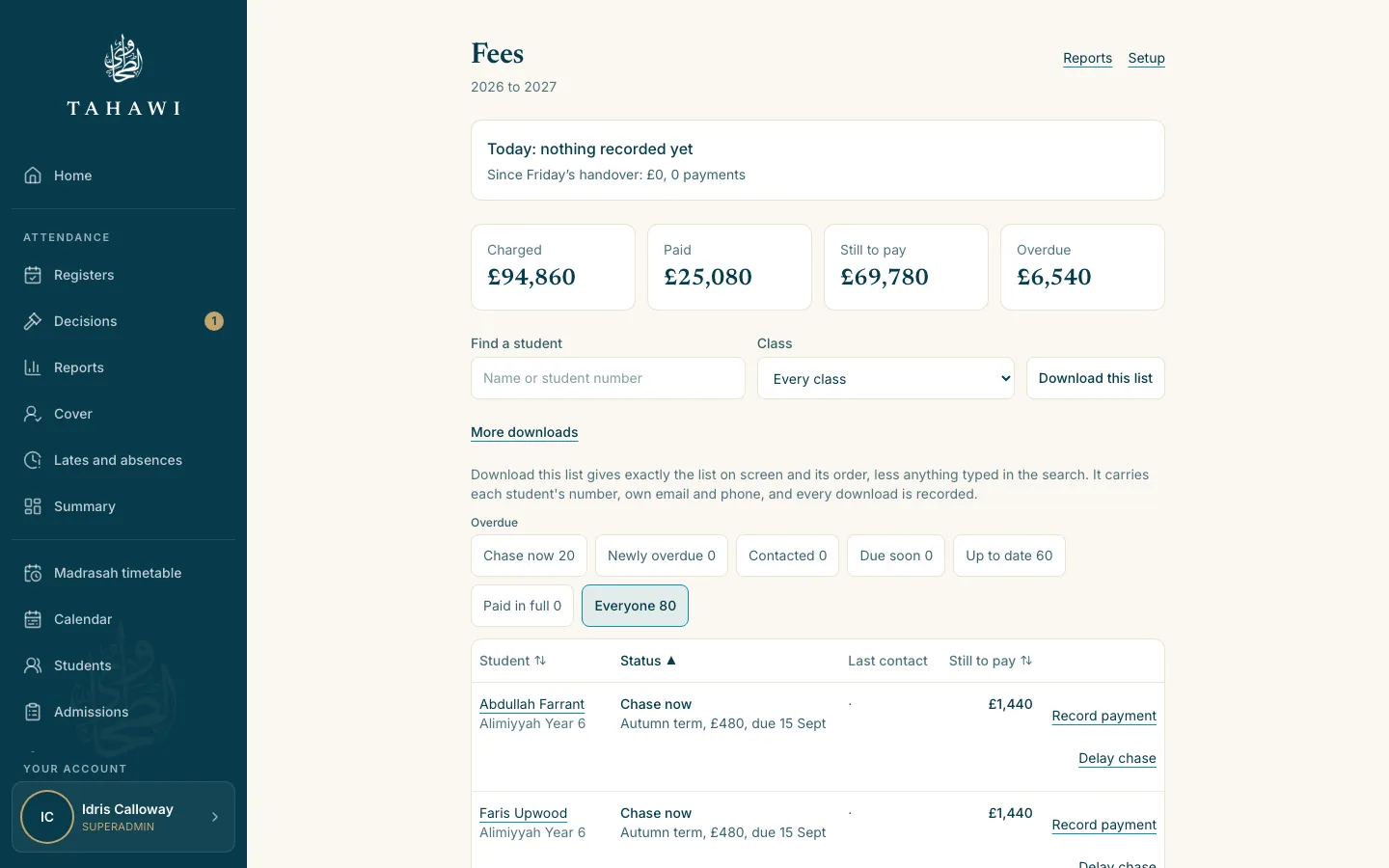
- Fees. A ledger with payment recording, receipts and controlled permissions for anything involving money. Fees are paid at the institute’s office, so there is no card payment feature.
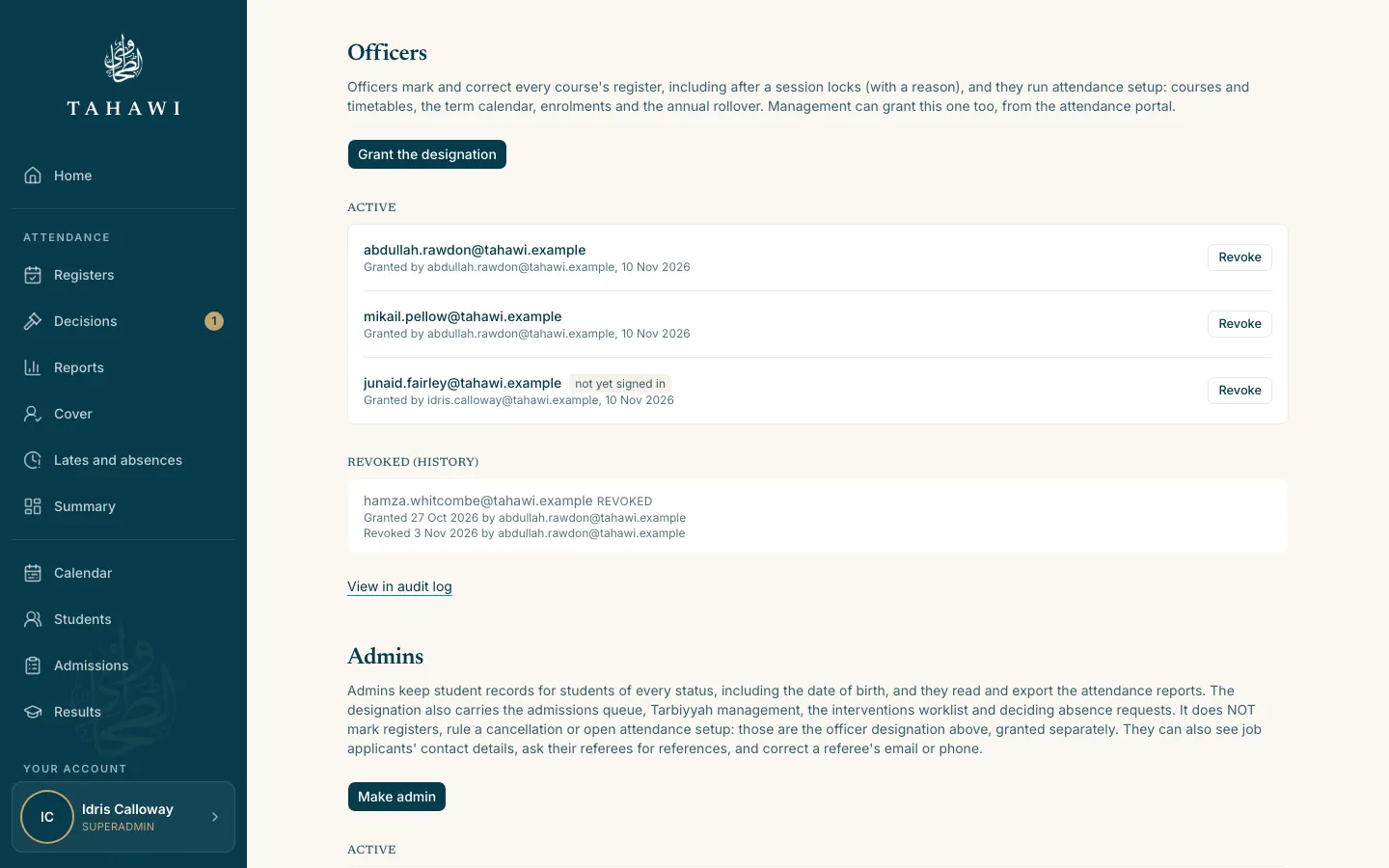
- Staff access. Roles (such as teacher and management) plus separate permission grants, an audit log of who did what, and a “view as” tool for support.
How it was built
This is the studio’s most heavily tested system. Access rules live in the database as row-level security, so a mistake in a web page cannot expose another student’s record. A written permissions matrix points to the code enforcing each rule. Every change runs automated checks: unit tests, database tests that try to break the rules, browser tests of real journeys, and accessibility sweeps of the portal. Features are switched on with flags once ready. Data from three earlier script-based systems was imported with checks comparing old and new results.
What it shows a prospective client
Tahawi proves the studio can replace a tangle of spreadsheets with a system several kinds of user rely on, handling sensitive records with care. It is the best evidence for schools, colleges and training providers: role-based portals, data protection, safe migration from existing files, and continuing tests.
Current status
The public website is live at tahawi.org. The repository records the exam results portal as released to students in July 2026, and the attendance registers as prepared for the September 2026 term. The fees module is built; this case study does not claim that it is switched on. It shows no portal screens, because they hold student and staff records, and quotes no student or staff numbers.
Facts
- The database has 381 migrations and 132 SQL tests that check access rules directly.
- The main application has 952 unit test files and 111 browser test specifications.
- Browser tests and accessibility sweeps run automatically on every code push.
- Money controls are permission-based: only staff with an explicit finance grant can record or change payments.
- The portals hold private records, so no portal screens are published with this case study.
Selected screens
Each caption says what the screen shows and when it was captured. An organisation or place shown on them does not endorse Tibyan Labs.
Inside the system
These screens use invented demo data, not real students, staff or results.
What this means for your project
If you need something similar, see portals and internal systems for packages and prices.
Related: Sanco Services