Built for a UK charity. Donation platform.
Sadaqah Jariyah Foundation: a donation platform
A new website, donation system and donor portal for a UK charity, with Gift Aid and monthly giving. The new platform is launching soon.
At a glance
- Organisation
- A registered UK charity
- What was built
- Public website, online donation engine, donor portal and charity admin area
- Built by
- The studio’s founder, before Tibyan Labs was formed
- Status
- In build, launching soon
- Built with
- Next.js, React, TypeScript, Postgres (Neon), Drizzle, Stripe, Better Auth, Resend, MDX, Vercel
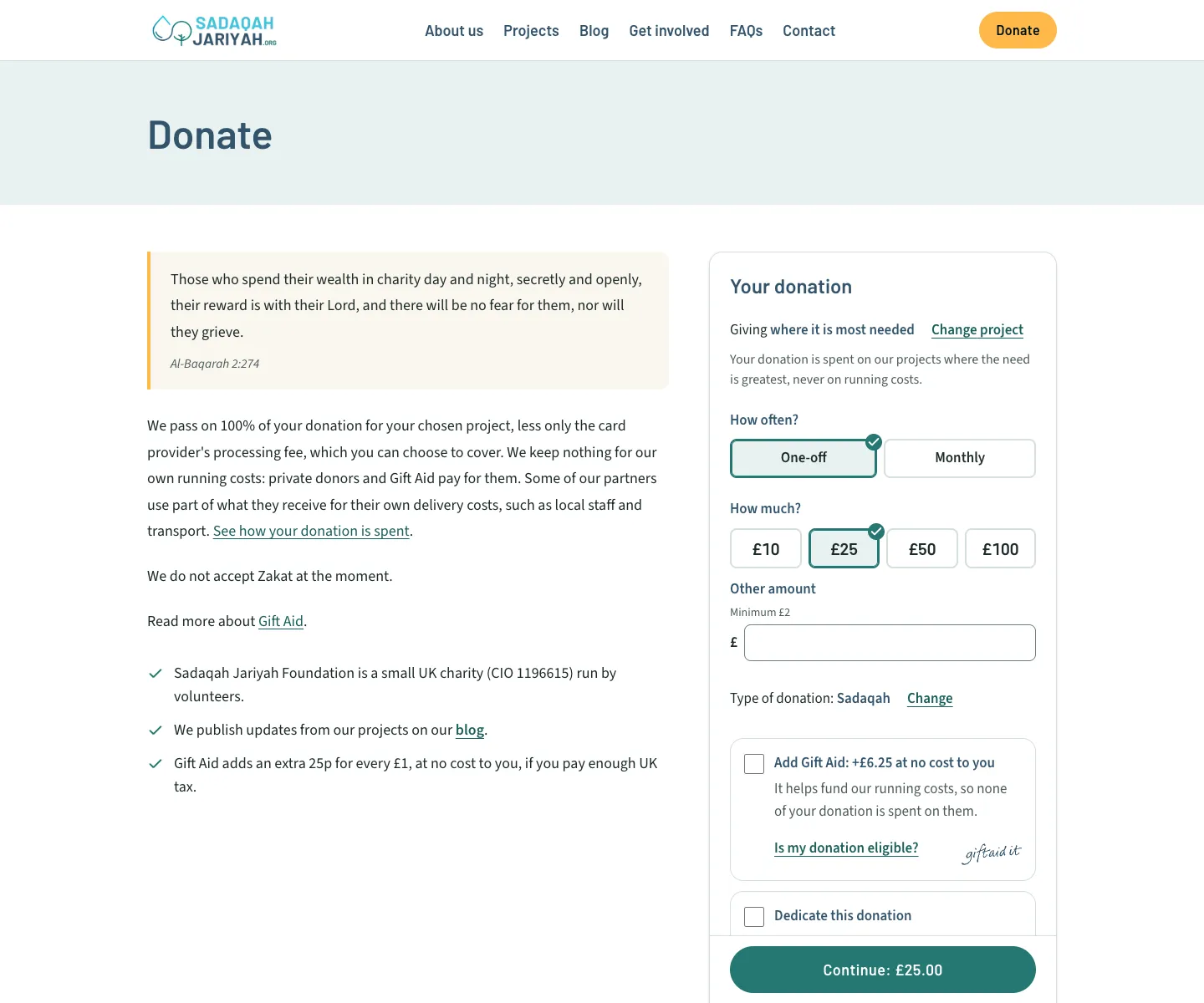
The situation and problem
Sadaqah Jariyah Foundation is a registered UK charity. Its existing website runs on WordPress with a donation plugin. A charity website must take money safely, record Gift Aid declarations correctly, protect donors’ personal data and be simple for volunteers to run. A replacement platform is being built to bring the website, donations, donor accounts and administration together.
What was built
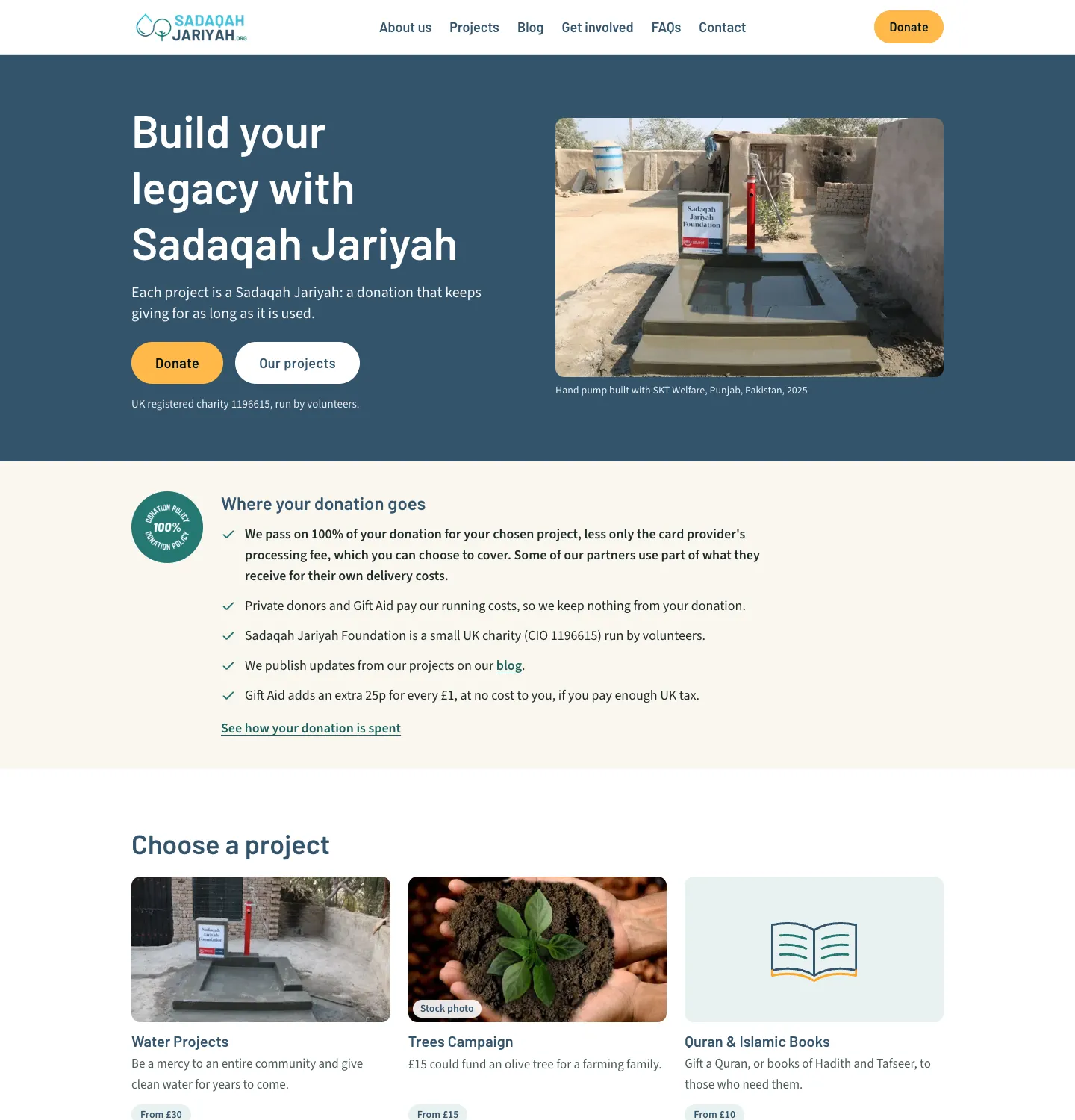
- A new public website. The existing pages, projects and news posts were moved across (35 documents), and the old site’s web addresses are mapped so they keep working or redirect to the new page.
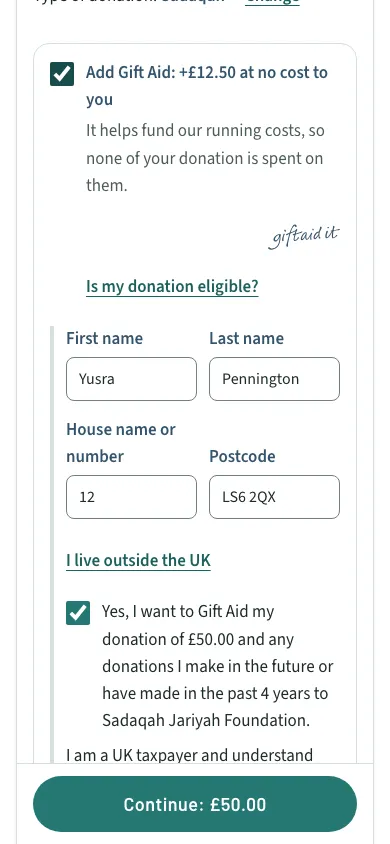
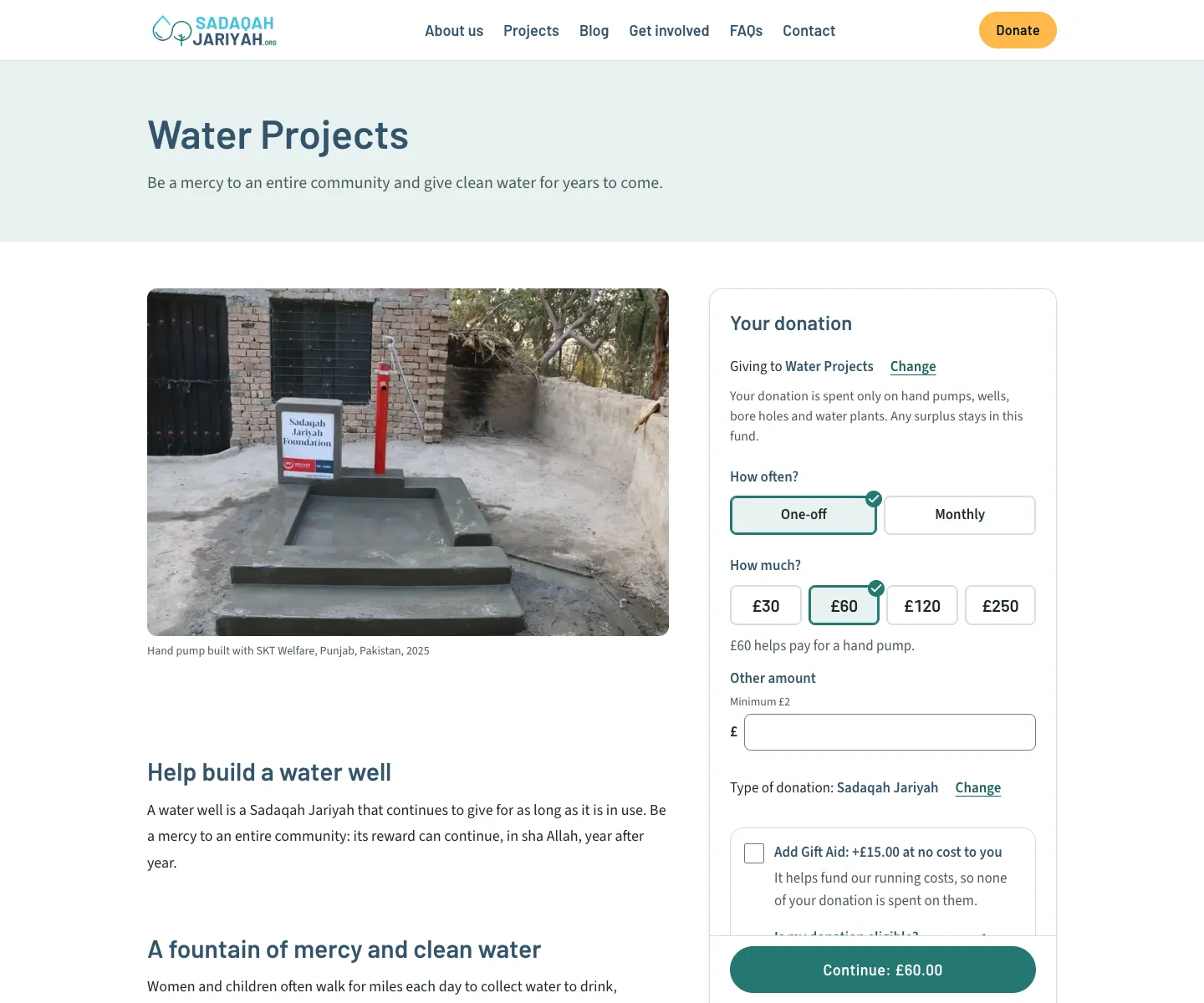
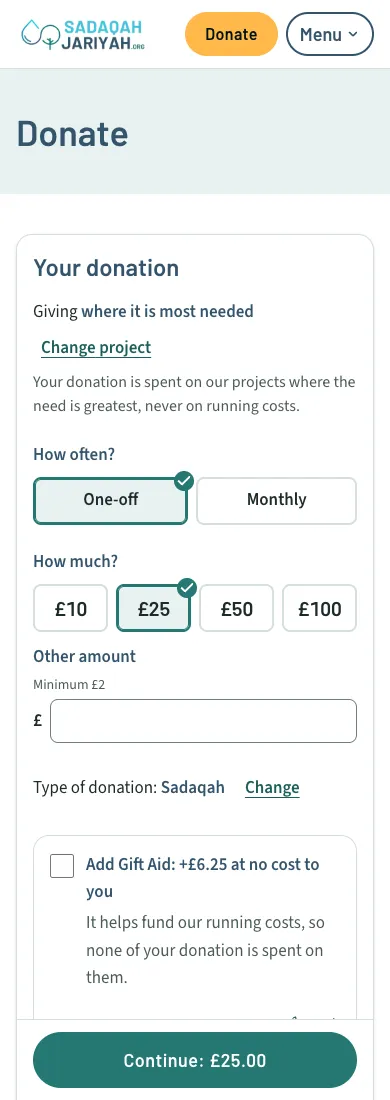
- A donation form designed with phones in mind. Donors choose an amount and a cause, give once or monthly, can add Gift Aid, and can cover card fees if they wish.
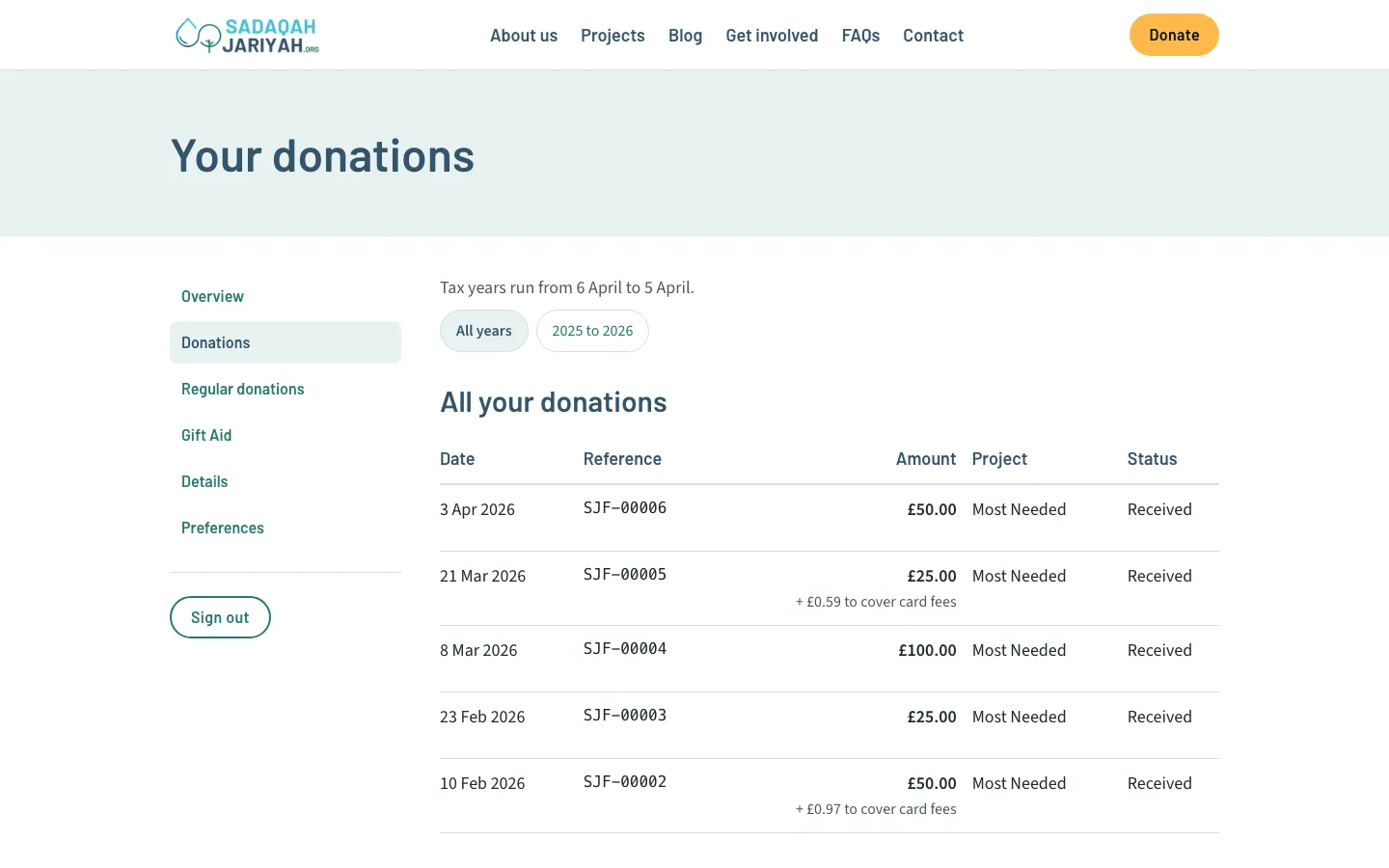
- A donor portal. Donors sign in by email link or Google to see their donations, manage Gift Aid declarations and regular gifts, and download an annual statement.
- Receipts and emails in one consistent design, with bounced addresses stopped automatically.
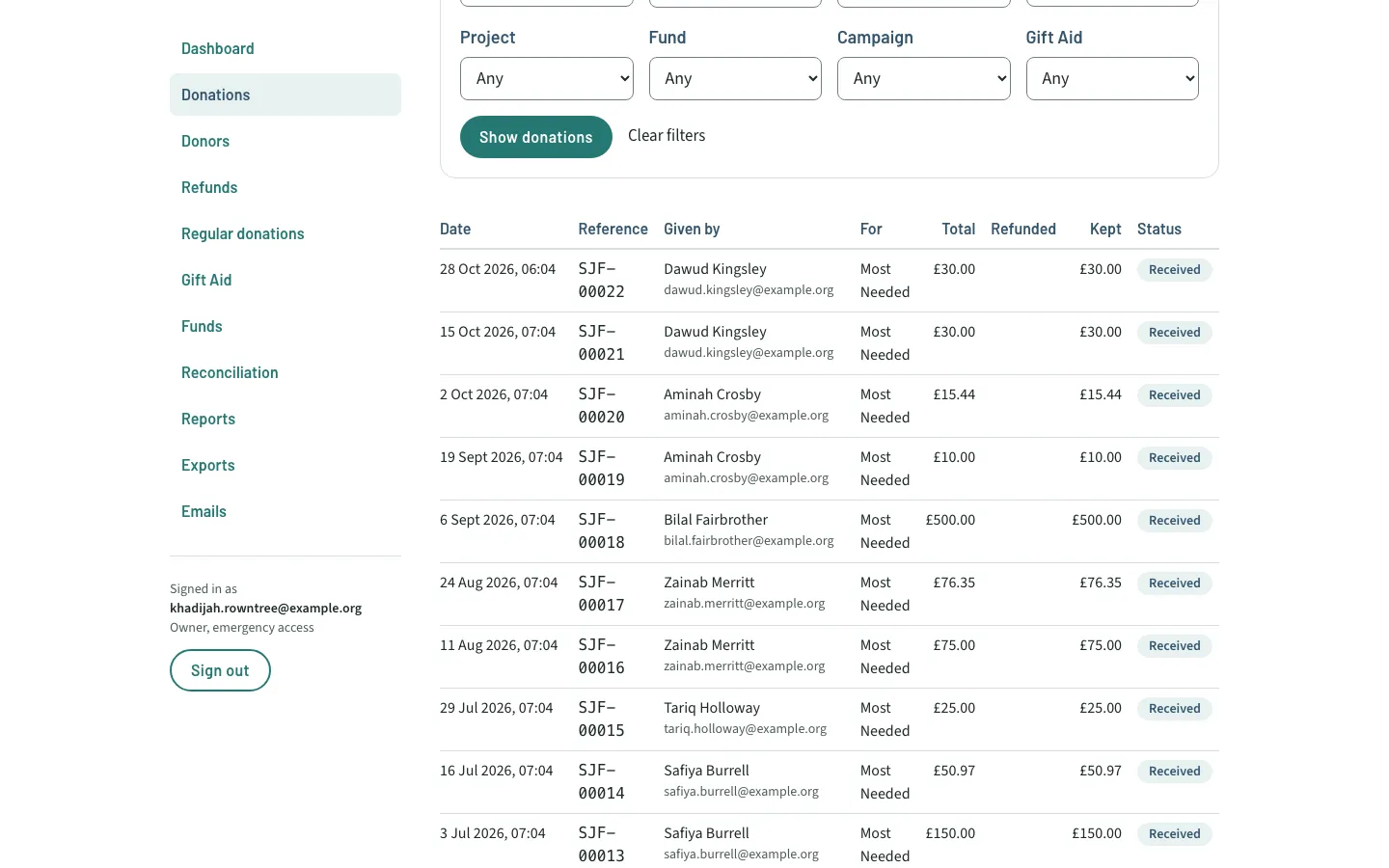
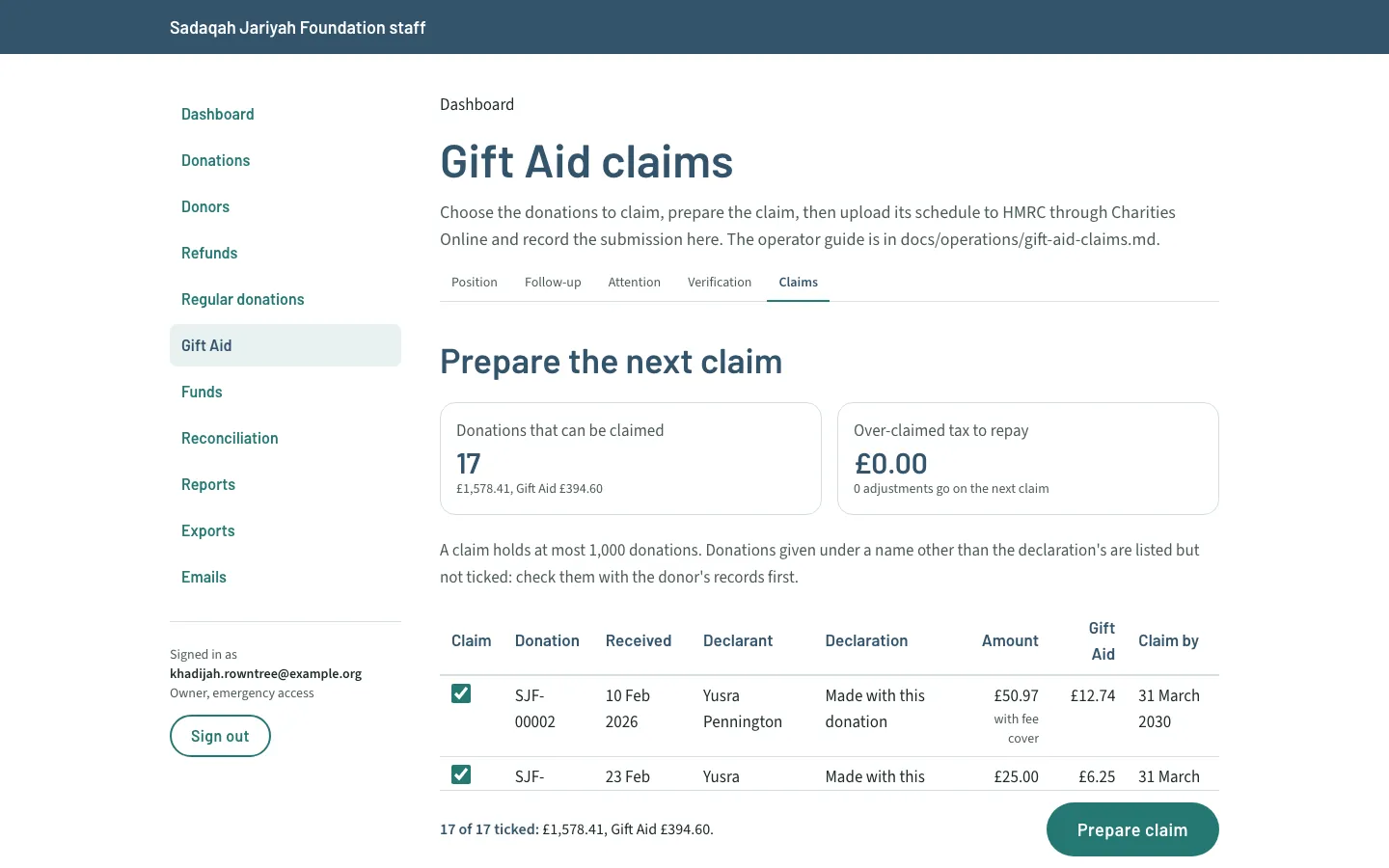
- A charity admin area. Staff can export figures for tax and financial years, see a trustee summary, resolve payments needing attention and prepare Gift Aid claims. They sign in with a Google work account, with an extra check for sensitive actions.
How it was built
Money is treated as the highest-risk part of the system. Payments run through Stripe, and a verified incoming-event inbox is designed so that a repeated notification from the payment provider cannot record a payment twice. Rules such as “refunds never exceed what was paid” are enforced by the database itself, not just by website code. Donors can only reach their own records, through restricted database roles. The code is split into modules, with boundaries enforced automatically. Releases run tests first, then database changes, then the site. Two adversarial reviews aimed at breaking the payment paths found defects, which were fixed with regression tests.
What it shows a prospective client
This is the studio’s evidence for charities and anyone taking payments: a donation journey, Gift Aid declarations and claim schedules, careful handling of personal data, and an admin area trustees and volunteers can use. It also shows how a legacy WordPress site can be replaced while keeping its old web addresses working.
Current status
The new platform is launching soon. It is not yet live and is not linked from this case study. The charity’s current WordPress site remains in place until the switch-over. Remaining launch steps include the charity’s content review, moving existing regular donors and live payment settings. No donation totals or fundraising results are claimed.
Facts
- The platform has 49 database migrations and about 250 automated test files covering both logic and the database.
- 35 pages, projects and posts were moved from the old site, with redirects for the old web addresses.
- Money rules (for example, allocations and refunds adding up) are enforced inside the database.
- The code includes a Gift Aid eligibility and HMRC schedule engine.
- The platform is launching soon and is not yet public.
Selected screens
Each caption says what the screen shows and when it was captured. An organisation or place shown on them does not endorse Tibyan Labs.
Inside the system
These screens use invented demo data, not real donors or donations. The platform is in build and not yet public.