Our own product. Public platform and admin system.
Mosq: a mosque directory and prayer times platform
A UK mosque directory with prayer timetables, hall TV displays and mosque admin tools, built and run as the studio founder's own product.
At a glance
- Organisation
- The studio’s own product
- What was built
- Public directory and prayer-times website, mosque admin dashboard, TV display service, and a mobile app (built, not yet released)
- Built by
- The studio’s founder, before Tibyan Labs was formed
- Status
- Live at mosq.app
- Built with
- Next.js, React, TypeScript, Supabase (Postgres, authentication, edge functions), Stripe, Sentry, Vercel, Expo
- See it
- mosq.app
The situation and problem
People looking for a local mosque often find prayer times on noticeboards, scattered websites and messages. Mosque committees, usually volunteers, struggle to keep a timetable correct and show it on a screen in the hall. Mosq gives worshippers one place to look, and committees a simple way to keep their own times right.
What was built
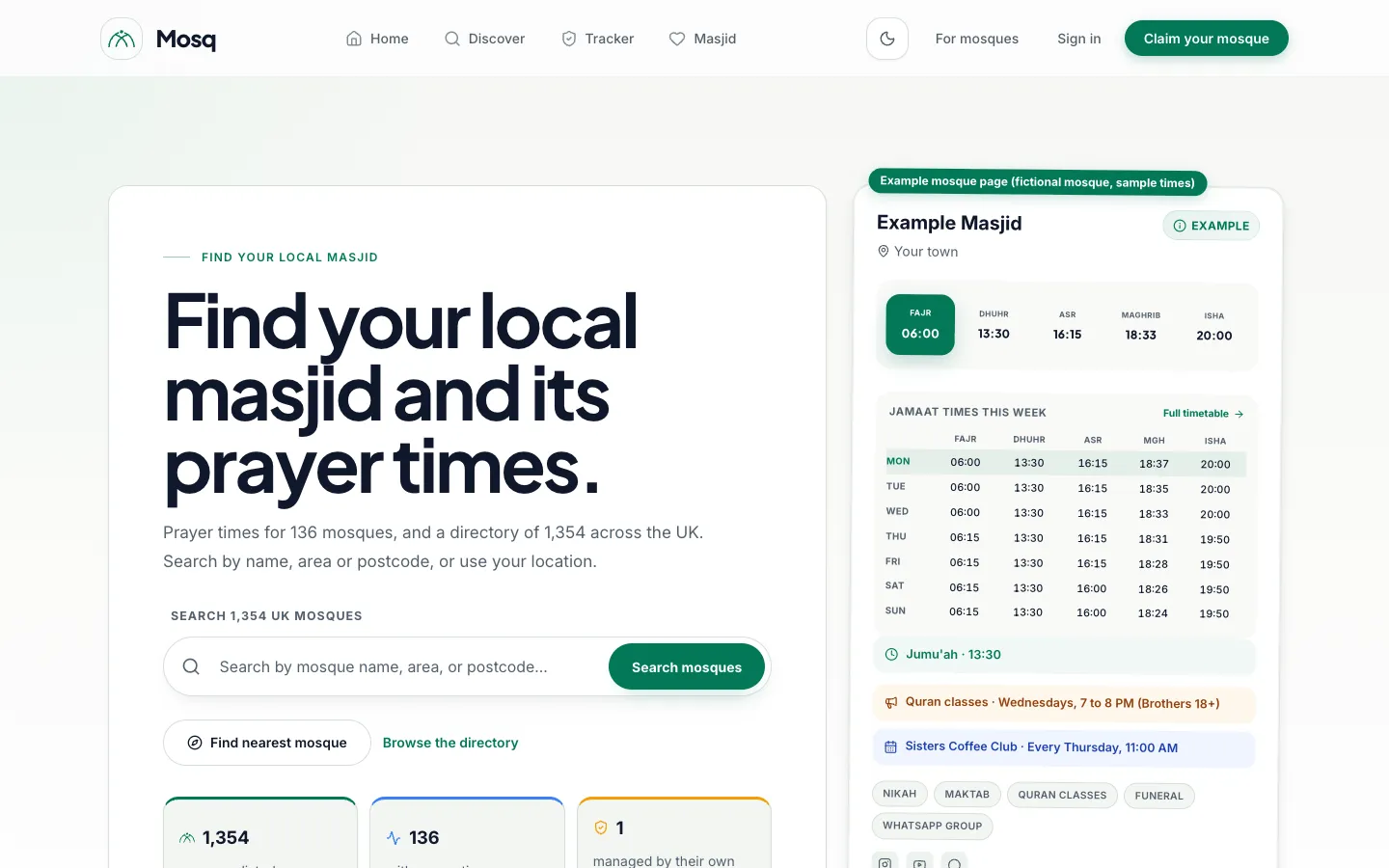
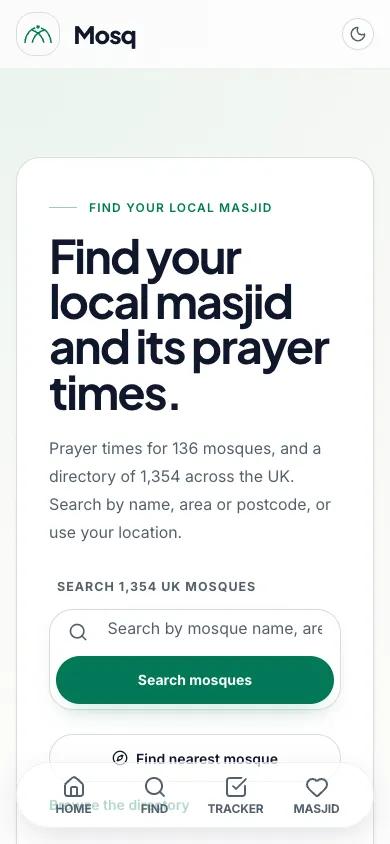
- A public directory. Visitors search by name, area or postcode, or use their location. On the day this page was written, mosq.app listed 1,354 UK mosques, with prayer times published for 136 of them.
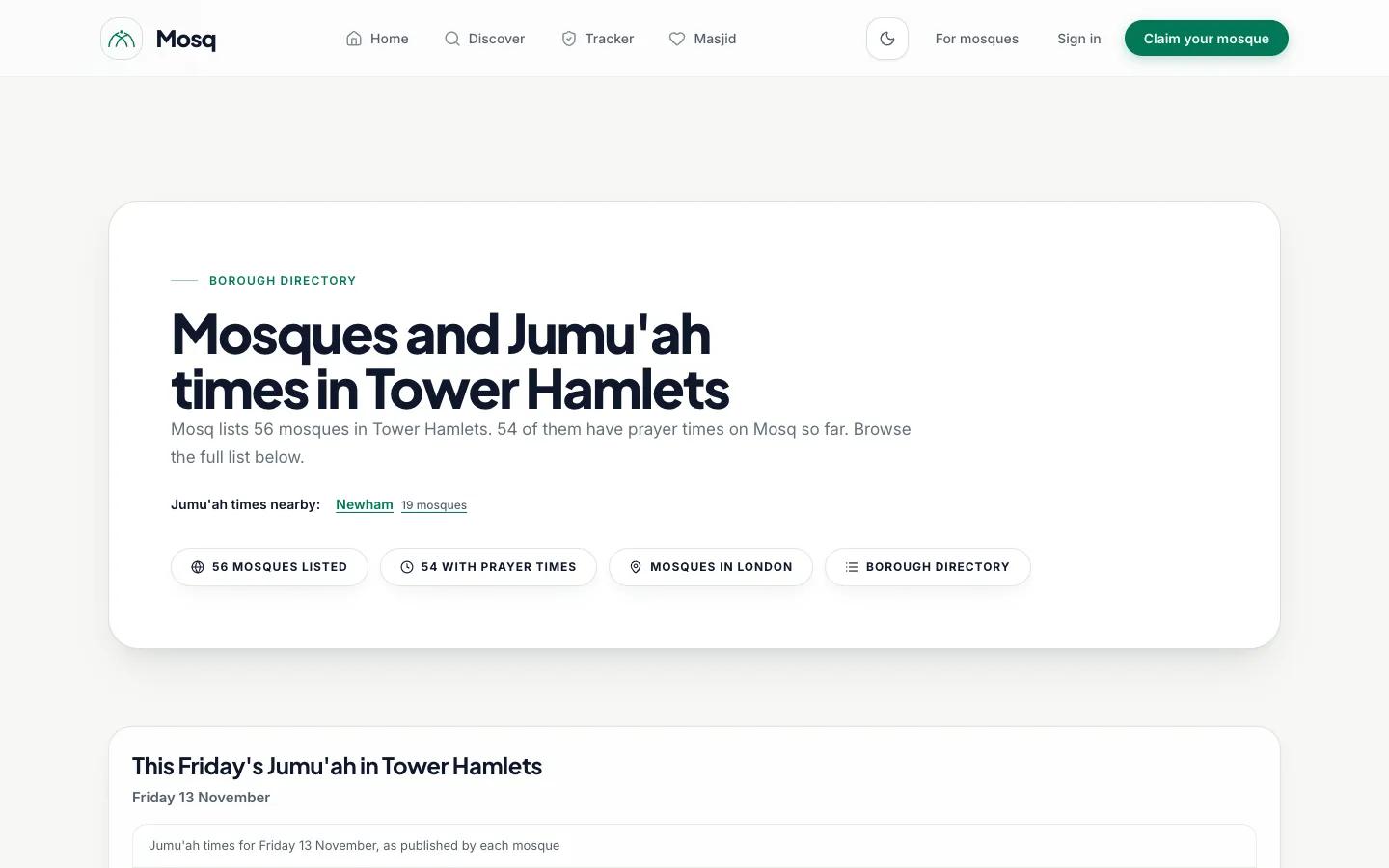
- A page for every mosque, showing the next prayer, today’s start and jamaat times, and the Friday prayer time, plus borough and city pages that list local mosques.
- Hall TV displays. A mosque can run a live prayer-times screen on an ordinary TV, with a choice of layouts and themes, and no specialist hardware.
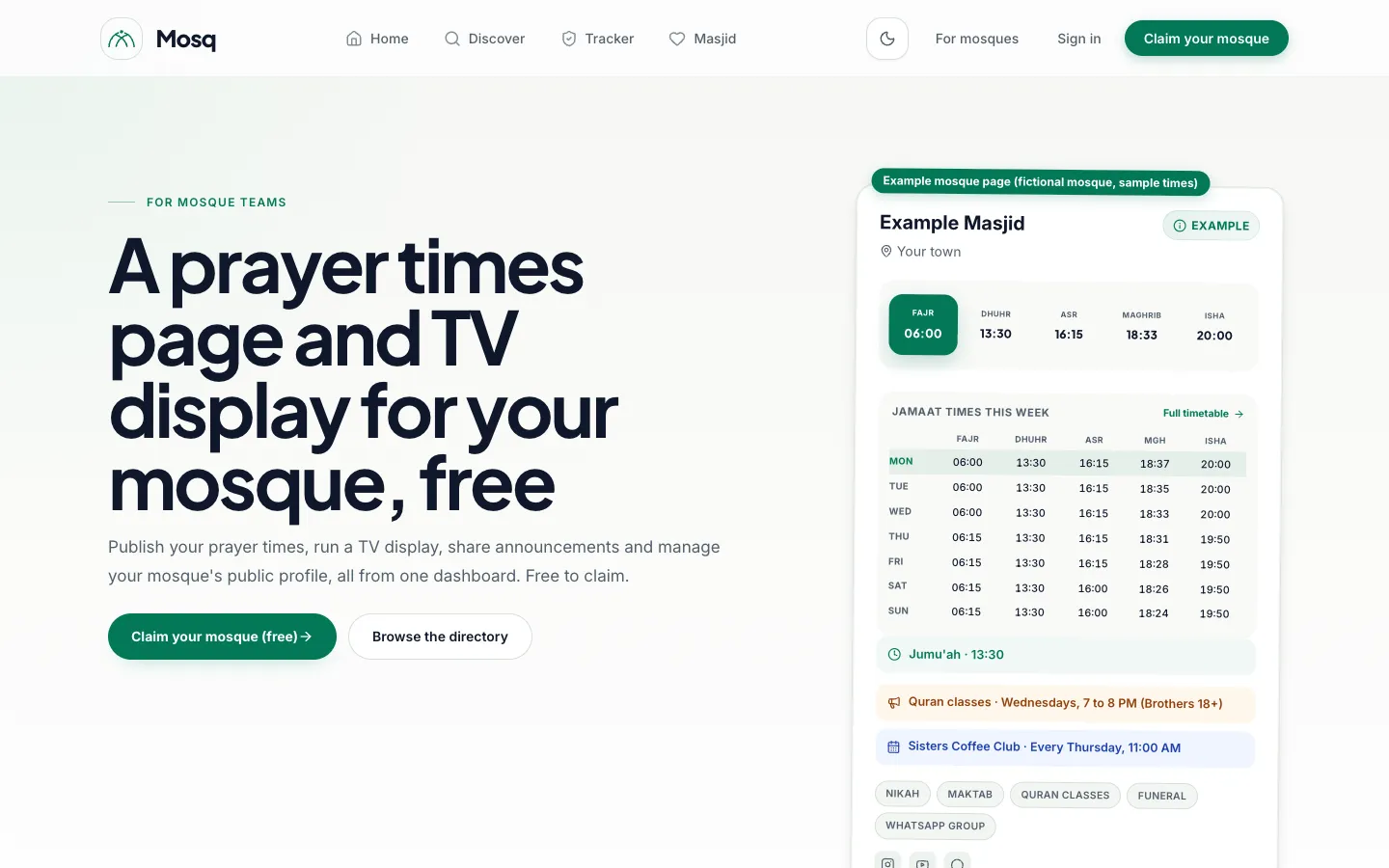
- Admin tools for mosques. A committee can claim its listing, add administrators, upload a photo or PDF of its printed timetable, and edit times. A back office lets the operator review claims.
- Billing, ready but off. A free plan and a paid plan are built, with card payments through Stripe. The paid plan is deliberately not on sale yet.
How it was built
The database is the authority. Rules about who may see or change what are enforced inside Postgres with row-level security, so the website and app cannot bypass them. Timetables follow a fixed order of trust: times a mosque enters by hand win over inherited ones, which win over calculated ones. The site uses Next.js and TypeScript on Vercel, with error monitoring through Sentry. Its own notice states that it sets essential cookies only and counts visits without cookies. Changes pass automated checks before release.
What it shows a prospective client
Mosq proves the studio can take a product from idea to a live, public system: a data model, public pages search engines can read, a logged-in admin area, payments and monitoring. It is the closest match for founders who need a first version built properly, and for organisations that need an admin portal and public website working from the same data. The studio runs it, and holds client work to the same standard.
Current status
The web platform is live at mosq.app. The mobile app is built but not released. Paid plans are built but not on sale. Some launch tasks remain, including finalising the operator’s legal details in the privacy notice and terms. No usage figures are claimed.
Facts
- The mosq.app home page showed 1,354 listed UK mosques and prayer times for 136 of them on 9 November 2026.
- The backend has 312 database migrations and five edge functions (scheduled and event-driven background jobs).
- The web app has 698 automated test files, plus end-to-end browser tests for the display and activation journeys.
- Access control is enforced in the database with row-level security, not only in the website code.
- The mobile app and paid plan exist in the code but are not released or on sale.
Selected screens
Each caption says what the screen shows and when it was captured. An organisation or place shown on them does not endorse Tibyan Labs.
What this means for your project
If you need something similar, see portals and internal systems for packages and prices.
Related: IlmHive